Changes in Latitude

Gallup and Healthways produce an annual report which ranks each of the 50 U.S. states according to a Well-Being Index. The survey and data reflect a composite profile of residents in each state based upon six sub-indices: life evaluation, physical health, emotional health, healthy behavior, work environment, and basic access. In case you’re wondering, the index methodology affirms the definition of health as, ” . . . not only the absence of infirmity and disease but also a state of physical, mental and social well-being.” Fair enough. Curious to know if you live in a state of well-being? Let’s see.

state of happinessPerhaps it’s no surprise, but the top ranking state in this year’s well-being survey is . . . (pause for effect) . . . Hawaii. Well, duh. How could one NOT enjoy a sense of well-being while living in the middle of the Pacific Ocean. In fact, Hawaii has maintained the top spot in the well-being index since 2009, having surpassed Utah, which ranked first in 2008. This year, Colorado ranked second, followed by (in order) Minnesota, Utah, Vermont, Montana, Nebraska, New Hampshire, Iowa, and Massachusetts. The state where I live, Georgia, ranked in the fourth quintile at number thirty-three. Among the states that ranked higher than Georgia, three puzzled me: Delaware, Pennsylvania and New Jersey. Really? Strangely, Florida ranked below Georgia and six of the bottom ten states are located in the deep south.

The three most unhappy states in the U.S. have remained unchanged for the last two years. Mississippi ranked 48th, followed by Kentucky and West Virginia, which has ranked last since 2009. Most people have never even visited West Virginia, though I hear the skiing is pretty good. But what’s so bad about West Virginia? And what’s so good about Nebraska and Iowa? Among the states that have sustained rankings in the top five for the last several years, several common attributes prevail. Residents of “happy states” tend to demonstrate a positive outlook, advanced emotional health, lower obesity, lower blood pressure, fewer incidences of clinical depression, favorable job environments, and reduced disease burden. As you may expect, residents of Hawaii and Colorado smoke less and exercise more, which contributes to their overall well-being. But does all of this really make you happy?

If I’ve counted correctly, I have visited six of the top ten states on the Gallup-Healthways Well-Being Index. I certainly felt happy while visiting these places, perhaps because I was on vacation. In fact, I would enthusiastically consider traveling to those states again if a suitable opportunity arose. By most accounts, I am moderately healthy. But since I live in Georgia, am I to assume that the majority of the people around me are obese, depressed and hate their jobs? Probably not. I know numerous happy people and many of them are struggling with life issues, vocational challenges and unsettling health problems.

Could I be happy in, say, Colorado? No doubt. I would have serious questions about maintaining my happiness in . . . Nebraska (no offense intended). I enjoy traveling and new experiences, but for me, the fundamental conditions that promote happiness are not necessarily tied to geography. As I see it, happiness is rooted in something other than landscape and latitude. Psalm 1:1-2 reads, “Happy (blessed) is the man who walks not in the counsel of the wicked, nor stands in the ways of sinners, nor sits in the seat of scoffers; but his delight is in the law of the Lord, and on his law he meditates day and night.”

Happiness is not just about whose company I avoid, but whose company I keep. Acknowledging the gracious and dynamic presence of a loving God engenders a sustained happiness that transcends geography, circumstance, success, and failure. Embracing that truth allows me to be happy in any state. Time to go pack for my trip to Lincoln. I hear Nebraska is nice this time of year. Postcard anyone?


Why the BCS Matters

After a prolonged layoff, the top two teams in the Bowl Championship Series will compete tonight for the crystal trophy and the right to be called “national champions.” Since 1998, the BCS has relied upon human and computer data to rank the top FBS (Football Bowl Subdivision) teams in the country. The contractual obligations associated with the BCS astound the wise and perplex the unenlightened. Love it or hate it, the goal of the BCS system is to crown a single, undisputed national champion among today’s 124 FBS teams. In the minds of many, BCS-era football seasons have culminated in puzzling match-ups with champions crowned in dubious pretension.

With public displeasure mounting, the NCAA presidential oversight committee agreed last summer to scrap the current system for a four-team playoff beginning in 2014. Though far from perfect, postseason champions will now be crowned on the field rather than determined through the machinations of microprocessors and biased human speculation. Future champions will be determined on the field of play, with the first national semi-final games hosted by the Rose and Sugar bowls, and the national title game hosted by the Cotton Bowl on January 12, 2015. We’ll endure one more lame-duck season under the current BCS system, before our collective frustration is alleviated by post-season games that matter. BCS

Now that we’ve settled the enigma surrounding college football championships, the BCS needs to be recast. Some acronyms languish under the burden of historical maleficence, like KGB or KKK. Most of us would never adopt and revise these acronyms to generate interest in a new product, organization or idea. But BCS is not beyond reclamation. Might I suggest – admittedly, at the risk of sounding superficial and irrelevant – that we affirm and commission the BCS with a new purpose and direction. The goal of this newly ordained system would allow us to develop our character and fulfill our highest purpose as human beings, regardless of which college football team captures our affection and commandeers our emotions. With minimal creativity and negligible fanfare, I recommend that we invest our energy and focus our attention on the Basic Christian Story.

While true football championships are contested and determined on the field, the truth about our past, present and future remains rooted in the extraordinary drama of creation, fall, redemption, and restoration. The basic Christian view of all reality hinges upon a correct understanding of these four pillars – four truths that describe and define our world, our condition, our hope, and our future. Each of us longs for a transcendent story that promises meaning and purpose. While we attach our personal stories to underwhelming narratives like the wins and losses accrued by our favorite team, our soul longs for something more.

There’s little chance I’ll miss the big game tonight. But I’m looking forward to the passing of the current BCS system and fully embracing the Basic Christian Story. No lasting truth goes untested just like no real champion goes unchallenged. So regardless of tonight’s outcome, some will debate the validity of the contest by dismissing the credibility of the contestants. Wins and losses aside, the biggest story has nothing to do with our team or our effort, but hinges upon the vital and lasting truth of the BCS.

What the World is Searching For

Recently, Fortune Magazine named Google the “best company to work for” in its annual survey and study of dream workplaces. If you’re not a Googler, an eponymous term for Google employees, you may not appreciate the nap pods, on-site bowling alleys, multiple cafes, and bocce courts. But almost all of us instinctively depend upon Google’s most celebrated and widely used product.  The Google search engine is such an intrinsic part of our culture that the company’s name has become a verb. On June 15, 2006, the word “google” was added to the Oxford English Dictionary, solidifying the company’s place in our vocabulary.

googleApproximately 5 billion searches are conducted on Google each day. This week, Google announced its global search trends for 2012. After conducting a study of over one trillion queries that people typed into the search engine during the previous year, the heralded results deliver a snapshot of our collective spirit, or “Zeitgeist,” according to Google’s headline. As you probably know, zeitgeist is a German word that essentially means the “spirit of the time.”

Though the results may not surprise you, any curious person would be drawn to (read: click on) the tagline on Google’s homepage, which read(s), “find out what the world searched for in 2012.”  If you’re reading this blog, you probably use Google. I’ve conducted over a dozen searches today. But who’s counting? Well, Google is. Though you can easily google this report (cue the rolling eyes), the top three searches of this past year were (in order) Whitney Houston, Gangnam Style, and Hurricane Sandy.

Without question, we grieve the loss of life, as evidenced by our dramatic and now measurable reaction to Whitney Houston’s death, and the devastation of Hurricane Sandy. Our search for Gangnam Style reveals that many of us are still trying to channel our inner Michael Jackson. We just needed a little help from YouTube.  The events and people identified as subjects of our most frequent searches also include the 2012 Olympics, the iPad 3, Diablo 3, Kate Middleton, and Amanda Todd. But a larger, more personal question lingers – what do these, and other queries, reveal about us?

Though related, the subject of our search differs from the meaning of our search. Our need for information grows out of the fundamental narrative of our personal story, identity and corresponding well-being. Even so, Bono sings it best: “I still haven’t found what I’m looking for.” But don’t blame Google. Our internet searches, as revealed by this year’s most frequent queries, expose our deepest need. Our searches expose a latent compulsion to identify with a transcendent story. Whether we find the story entertaining (Gangnam Style, 2012 Olympics, etc.) or tragic (Houston, Todd, etc.), we instinctively project ourselves into these stories as characters who long to achieve recognition and connection, or avoid adversity and misfortune. Caught up in the aspiration of transcendent happiness or the aversion of devastating pain, our hearts and minds demand affirmation and solace.

Now that 2012 is coming to a close, what will we search for in 2013? Truth be told, most of us will search for the same thing using the same tool. Though there will be new trends, personalities, tragedies and events to enter into Google’s search engine next year, the source and hope of our query remains unchanged.  We are inescapably drawn toward a life that matters and Google is our witness.

Winners and Losers

Two weeks ago, the Presidential election finally culminated with an anti-climactic finale. All eyes fell upon the electoral college while the popular vote suffered in relative obscurity. With moderate ease, the incumbent Democrat defeated the Republican challenger after an insufferably long campaign. Swing states occupied the attention of the media to the exclusion of a large majority of the country’s registered voters.  If you were not a resident of Ohio, Virginia, Pennsylvania, Michigan, Wisconsin, or Colorado, you may have felt inferior to the these highly coveted states where campaign expenditures exceeded the GDP of most countries in the western hemisphere.

In the end, over 122 million Americans voted with 50.6% casting a ballot for the incumbent. In a free and democratic society, this is considered a majority. But as we’ve learned recently, a majority doesn’t necessarily translate into victory. Even so, 322 electoral votes cemented the winning candidate’s bid for re-election. Though the win would never be considered a landslide, a simple majority coupled with an overwhelming number of electoral votes signals a shift in the political, moral and economic landscape. A tipping point has been reached and every American will now subsist within a culture of prolonged economic deflation, moral ambiguity and political vehemence. The winner gets to write the history. In our culture, losers are typically villanized by means of historical revisionism, media pontification, and thorough marginalized behind the veneer of mob rule. Welcome to the American dream where winners are idolized and losers are demonized.

I’ve always held a vague suspicion of the majority. Perhaps my history teachers convinced me that the majority didn’t always embrace the highest principles or the greatest good. Even a cursory review of history’s greatest villains reveals how the people of Russia, Germany, and even the southern US in the early and mid-19th century espoused ideals and installed leaders who advocated pernicious worldviews. Some victories engender painful consequences.

Author Richard Rohr observed, “People think that by defeating the other side, they have achieved some high level of truth! Very sad, but that is as far as the angry or fearful dualistic mind can go.” True winners (i.e. leaders) don’t just affirm people in their self-serving, immature neuroses. As CS Lewis once wrote, “Hell is having your own way all the time.” Living in a mob-induced euphoria that only celebrates the advancement of self inevitably leads to fear, isolation and anger. In this state, the spoils of victory intensify the narcissism and diminish the soul to a place of sanctimonious condescension. In the end, this election was not about the rich and the poor, it was about transcendence and maturity. When fear and insecurity form the impetus for our actions, no level of maturity can be achieved. In this condition, our hope can only rest in the blind fanaticism of the one who affirms our fear and anger, and promises to deliver a trouble-free future. To the victor go the spoiled.

My Big Fat Replacement Ref

I watched the first quarter of this week’s Monday Night Football game. Those fifteen minutes moved at an arthritic pace, equal to the borish syncopation of recent Academy Award ceremonies. The highly anticipated return of Peyton Manning to MNF drew millions of viewers anxious to witness the second coming of this generation’s most proficient passer. Manning’s first road game with his new team, the Denver Broncos, proved to be unceremonious and altogether uncomfortable to watch. Yes, Manning threw three interceptions in the first quarter and his team fell behind early. But, as I’m told, the visiting Broncos mounted a respectable comeback, yet still lost the game 27-20 to the upstart Atlanta Falcons. I went to bed early, fully convinced that sleep would be more titillating.

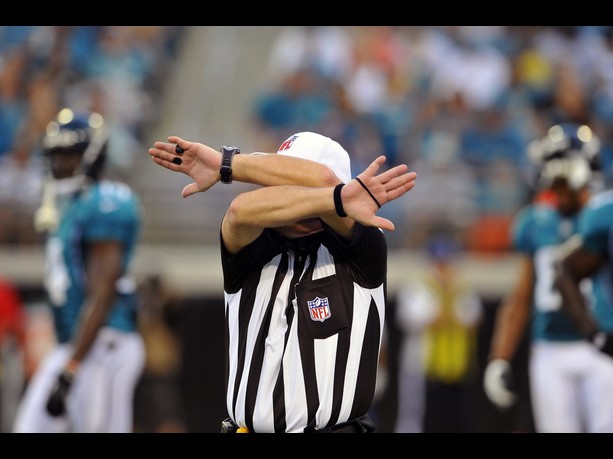
It may surprise some to know that Peyton is not running for President, though maybe he should. Aging quarterbacks reinvent themselves regularly in the NFL, but few have been held in higher esteem than this year’s transfer from Indianapolis. Ironically, as Monday’s game progressed, it wasn’t Peyton who drew all the attention, except for the ubiquitous squatters playing in the Falcon’s defensive secondary. Many fans were drawn to the underwhelming and comical presence of the NFL’s replacement refs. Fortunately for Peyton, someone else’s mistakes overshadowed his own.

As some of you know, the replacement referees are the NFL’s answer to a unionized squabble between the regular referees and the League, personified by Commissioner Roger Goodell.  We often refer to replacement workers as “scrubs.” Call them what you may, I find the drama quite entertaining. Though most of the scrubs are officials from Division III college football, some have officiated only on junior high and high school levels. I’ve known a few high school football officials and they are all hard-working, honest individuals who love the game and grieve over missed calls and imperfectly officiated games. There’s no reason to think that most of the NFL’s replacement officials don’t approach their part-time assignments the same way. But we’ve learned that in the age of Fantasy Football and labor disagreements, nothing is as real as it appears, even the presumption of unbiased officiating. The hope of immortal transcendence often attaches itself to the number of wins and loses achieved by our preferred franchise, or the performance of our fantasy team’s prized players. In the middle of a game, one replacement official chastised a starting quarterback. “Come on,” the ref vented, “I need you for my fantasy (team).” Referees are no exception to this mesmerizing product we call professional football and the larger-than-life personalities that excel at the game.

Like preschoolers roaming around the floor of the New York Stock Exchange, replacement officials have annoyed and exasperated the players, coaches and fans with a dubious grasp of the rules and inexplicable game-altering calls. The ferocious emotionalism of the game and the corresponding financial stakes are too high to be left in the hands of amateurs, we insist. But this is the very place where the clear-headed should intervene and deliver an unpopular but reasonable message. I am not naive enough to argue that the NFL is just a game. The growing cancer of greed and the hope of lucrative rookie contracts can be observed by reading the tweets of elite high school athletes looking for the surest path to the NFL. Is it really any wonder that seventy percent of NFL players file for bankruptcy within two years of retirement? At the excruciating pace of today’s game, replacement refs are only postponing the inevitable court dates for many of this year’s NFL retirees.

For the record, I’m a fan of the game. But football is not a competition that will uncover the cure for cancer, stabilize tensions in the Middle East or eradicate terrorist cells. If our favorite team squanders a lead due to the inept determination of a replacement official, no one will die, except the guy whose gambling debts have made him the subject of a hard target search. My favorite NFL team won last Monday night but may not fare so well this weekend. Under the near-sighted and uncoordinated supervision of this week’s replacement refs, who knows what might happen. I can only marvel at the product on the field and be grateful that the NCAA officials are not threatening to strike. Now that would be personal and catastrophic. Pardon me. Roger Goodell just called. Seems I’m needed on the field in San Diego this Sunday afternoon. Better go wash my black and whites. Go Falcons!!

What’s My Reading Level?

I admit it. I like to read. Reading is my golf, I guess. Depending upon my appetite, I could easily spend more on books than on a round of golf.  The good news is that my book splurges often generate enjoyment lasting longer than 9 hours, which is the average time it takes me to play a round of golf. It’s amazing how long it takes to find errant golf balls in adjacent parking lots and neighboring properties. A friend of mine told me that I play “army golf.” I chuckled at his assessment but didn’t realize it was an insult.

Since my preference is for reading, I’ve discovered that I’m attracted to certain authors and genres. I read fiction but prefer non-fiction. I enjoy history buy typically avoid biographies. What is most appealing to me is the art of gifted writing. I don’t consider myself a good writer, especially when compared to history’s best – depending upon how you define “best.” Reading Shakespeare is painfully frustrating to me, though I enjoy the stage presentations immensely. Perhaps I’m not well-rounded.  Or maybe it’s my reading level.

A recent article in the University of Minnesota’s Humphrey School of Public Affairs’ Smart Politics publication featured an assessment of the recent convention speeches by Michelle Obama and Ann Romney. According to the article’s author, Michelle Obama’s DNC speech was written at 7 grade levels above Ann Romney’s RNC speech. According to the article, Mrs. Romney’s speech was written at the lowest grade level in convention history, while Mrs. Obama’s was written at the highest grade level in convention history. Michelle Obama’s speech was written on a 12th grade reading level with an average of nearly 31 words per sentence.  Mrs. Romney’s speech was written on a 5th grade level with an average of approximately 15 words per sentence. As a point of reference, the King James Version of the Bible was written and translated on what is, today, a 12th grade reading level. By comparison, the New International Version was translated on a 6-7 grade reading level. But what does all of this mean, really?

Some analysts conclude that the respective convention speeches reflect the intellectual capacity of the listeners, while others focus their assessment on the mental acumen of the presenters. First Lady Abigail Adams once said, “We have too many high sounding words, and too few actions that correspond with them.” True enough. Proverbs 10:19 reads, “When words are many, sin is not absent.” (NIV translation for my 6th grade readers). I can say with confidence that reading and speaking are two different activities. But in order for either to be effectively received, one essential attribute is necessary, and it has little to do with word count and reading level. It explains why you didn’t count the number of words in the last sentence. But it’s twenty-six, in case you’re wondering.

Whether you prefer short or long sentences, or comprehend those sentences on a 5th or 12th grade reading level, what’s most essential for impact and meaning is clarity. In Politics and the English Language, George Orwell wrote, “The great enemy of clear language is insincerity. When there is a gap between one’s real and one’s declared aims, one turns as it were instinctively to long words and exhausted idioms, like a cuttlefish spurting out ink.” With that, I’m going to finish reading Oh, the Places You’ll Go by Dr. Seuss. It’s written on a 3rd grade reading level and suits me perfectly.

Facts are Stubborn Things

With the blogosphere ablaze with comments on the conflicting messages heralded by the conventions of our two political parties, some of us are befuddled about the facts. Rather than raise my voice in favor of one set of facts against the other, I find that it’s more advantageous to consider the relevance of truth.

Facts come to us in a random and often disconnected fashion. Truth transcends our individual experiences and opinions by offering a more comprehensive and penetrating perspective. Facts describe reality as we think it is. Truth frames reality as it is intended to be. Some may argue that there is no transcendent truth and therefore no corresponding obligation on our part to honor the demands of that truth. Truth, we are told by some, is relative and must be left to the god of individualism. Perhaps I should say the gods of individualism.

One political party announced its intention to eliminate all references to “God” from its platform. Then, in a bizarre move, the resolution was reversed on the floor of the convention, much to the chagrin of many delegates who chose to “boo” the decision. Party leaders clearly have a problem with the reality of truth as evidenced by the decree that ultimate accountability, and sound decision-making, could be sacrificed on the altar of vote pandering. Ideas like marriage, life and freedom must be redefined in order to suit the new and emerging conscience, so the question of God’s presence must be reconsidered in light of his impact upon the party’s platform. In the current political environment, it comes down to this: To God or not to God.

The new facts, as espoused by some, open rightful opportunities for those wanting to enjoy love, economic advancement, affordable healthcare, and reproductive freedom. For these privileges, no wrestling with the truth is required, only a platform built upon the suppression of any reference to God. By adopting the sentiment expressed by Dostoyevsky’s Dmitri Karamazov, “If God doesn’t exist, then everything is permitted,” any cause or deed is defensible. When truth gets in the way, dismiss the court of determination, then you’re free to redefine your actions any way you wish.

Perhaps you think I’m being too harsh. In his argument in defense of the British soldiers in the Boston Massacre trial, John Adams declared, “Facts are stubborn things; and whatever may be our wishes, our inclinations, or the dictates of our passion, they cannot alter the state of facts and evidence.” Even before he was elected president, John Adams appealed to truth as the ultimate framework for evaluating the facts. He knew that the prevailing passion of the citizens of Boston incited an egregious distortion of the facts leading to a redefinition of the truth. In these conditions, no form of justice or freedom can be achieved. Fortunately, Adams’ case prevailed and the accused were released. Though some may wish to censor appeals to God, the truth is the harder we try to demand god-less speech, the deeper we sink into our own wishes, inclinations, dictates, and passion. Having surrendered to the gods of personal whim and self-serving passion, we’ll experience the complete and utter loss of freedom, hope and security. This is the truth.

Bonhoeffer’s America

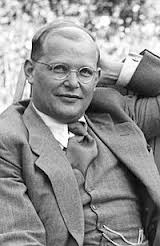
Lutheran pastor and theologian Dietrich Bonhoeffer’s passion to protect and purify the church from government efforts to nazify German protestants cost him his life.  On April 4, 1945, in a delirious rage, Adolf Hitler issued a direct order for the execution of the Abwher conspirators being held at Flossenburg concentration camp.  Upon hearing his sentence, Bonhoeffer said to an English friend, “This is the end – for me the beginning of life.”  He was hanged at dawn on April 9th, just two weeks before American soldiers liberated Flossenburg camp and three weeks before Hitler committed suicide.

The tragic end of Bonhoeffer’s life underscores the dramatic events endured by millions of Europeans in the 1930’s.  Even as Bonhoeffer fought to preserve the biblical definition and mission of the church, the rising power of Nazi oppression and control captivated the wounded and marginalized German citizens who still felt the devastating effects of the Treaty of Versailles. Rather than embrace a biblical worldview, many German Christians capitulated to the inspiring message of nationalism and racism espoused by Nazi party leaders. Charismatic leadership overpowered sound principles and ideals. Soon, many Germans were worshiping at the altar of the state while singing the anthems of Martin Luther. The transcendent hope of a utopian Germany fostered a discordant climate of government-sanctioned preaching and discipleship.

It’s unlikely Bonhoeffer would have suffered a similar fate if he lived in the United States today, though we may be creeping closer to this possibility than we know. The pain of struggle, disappointment and failure leads us into habits of misplaced hope. Without measurable success and relative comfort, we mortgage our future and our souls to appealing and mesmerizing personalities.  These demagogues offer a message of hope and change, thereby giving our disappointment a name and objectifying our anger. We are told that there must be someone to blame and therefore someone has to pay for our discontent.

Bonhoeffer’s Confessing Church offered a biblical but risky alternative community in which believers could form a meaningful and Christ-centered fellowship.  The goal of the confessional gathering was to eliminate the  growing cancer of cheap grace and the corresponding suppression of free worship. It was common practice for German-state churches to receive money from public taxation. When we allow government to determine our financial well-being, we naturally relinquish control of our message and our calling. Why would you object to the hand that feeds you or advocate a conflicting message if doing so would lead to reduced or eliminated funding?  Like some today, many Germans found that it was easier to embrace a divisive and ruinous message than form an objection on moral principle. Party alliances didn’t appeal to Bonhoeffer, so it’s difficult to project his political affiliation in today’s bureaucratic environment. Without question, he would have raised his voice in favor of limited government and warned of the easy believism of political emotion.

No party or politician can deliver transcendence or provide redemption. Change is empowered by hope and that is the essence of transformation.  But misplaced hope leads to deeper despair and increased frustration.  Bonhoeffer knew that his life, and the lives of his fellow countrymen, existed beyond the feverish rhetoric of politics. If we fall victim to mesmerizing speeches and hypnotic personalities, we easily forget the truth of who we are and who we are intended to become. In doing so, we sentence ourselves and our country to a dark and grievous future. Bonhoeffer’s hope was built on nothing less than Christ glorified and the correlation of limited government.  For this hope, he offered his life.

Tuna Fish and Pasta

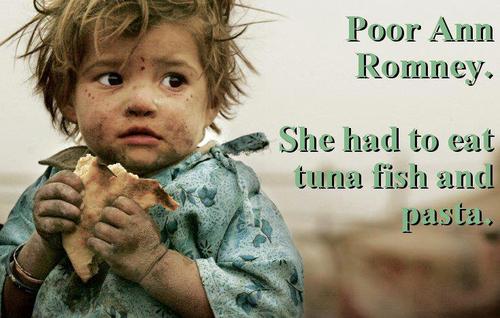
For the record, I’m not a big fan of tuna, especially the kind you buy in a can.  Left-over tuna leaves a sour smell in your refrigerator and, worse, in your mouth.  Pasta is definitely an upgrade when accompanied by the appropriate sauce. When I was growing up, I didn’t eat a lot of tuna, but like many others, I ate my share of pasta. In my home, these two food items were never combined into a single dish. I guess we were rich and therefore, I was never forced to eat tuna fish pasta because I always had other options.

My hypocrisy is legend, so my confession is not earth-shattering. It won’t surprise you to know that I occasionally suffer from envy. To be honest, no one really suffers from envy. We suffer in envy. Envy is a condition and attitude resulting from feelings of discontent with regard to another person’s perceived advantage, status, success, or possessions. “Envious” is the word we use to describe those who personify this feeling. In other words, envy is a description of our choice  in responding to others about whom we feel inferior. Envy is not the culprit. Dissatisfaction with our current condition or status is the perpetrator. Ironically, those who are most dissatisfied rarely acknowledge their envy, choosing instead to blame everyone else for their discontent.

Those who roundly criticize and ridicule the advantaged only announce the dissatisfaction that exists in their own spirit. Rather than deal honestly and personally with the disappointment that permeates their own lives, they fall into the trap of formulating and spewing venomous diatribes against the privileged. The vituperatives announce the presence of a latent anger that goes unacknowledged and unconfessed. Verbal tirades against the fortunate only reveal the cancer of personal bitterness.

Bankruptcy comes in many forms. Without financial resources, an individual may suffer the pains of hunger and homelessness. Without emotional or spiritual capital, one may collapse under the weight of self-imposed envy, thereby sentencing oneself to the misery of malice, sarcasm and rancor. Today, there is no shortage of people willing to join the discordant ensemble of disgruntled envy. In our floundering economy, there is a fanatical army of envious and dissatisfied souls who cannot make sense of their pain unless they are blasting the blessed. Rather than debate and discuss the ideals and principles that lead to a better life, they’d rather play in the unproductive mud of slander, belittlement and defamation. Nothing salves the soul better than a well-articulated invective against a well-known stranger who withholds the key to my personal happiness. The power of this illusion is intoxicating and troubling.

I hope to rise above all the pettiness that swirls around in my own life. I’d prefer to live in the light of inspiration rather than resentment.  One feeds my soul, the other shrinks it. If you think this is political, then you’ve missed the point. It’s personal. As you raise your voice against those you claim to hate, thereby exposing your envy and bitterness, you pay a high price for an attitude leading to your own demise. The bitter and dissatisfied voices have clearly revealed that it’s much easier to blame the fortunate than it is to help the unfortunate. Besides, we all need an ally in our hostility in order to assuage the pain of our nagging discomfort and self-hatred.

I’m going into the kitchen now to prepare a tasty dish of tuna fish pasta. Someone more fortunate than me is probably eating steak for dinner. Don’t you hate that?

Back in Chains

Vice President Biden sparked widespread indignation by suggesting that the Republican candidates for President and Vice President would put us “back in chains.”  Doug Wilder, the nation’s first black governor, blasted Biden and demanded an apology for his insensitive remark. A Washington apology is about as frequent as Halley’s Comet, so I won’t be holding my breath. There may be a little back-peddling and posturing, but no full retraction is forthcoming.

Putting voters back in chains is an ironic metaphor.  Historically, those in chains didn’t have the right to vote, much less enjoy the benefits of a free society.  And yet we’ve been warned of an imminent reduction of freedom and the unleashing of Wall Street tyranny and recklessness if Republicans take control of the White House.  Politicians carry little or no authority to establish a particular worldview, but they can certainly espouse an obtuse direction.  Metaphors aside, only those who break the law are in danger of being shackled.  But even prisoners have rights.

Limited government has a long history, which we seem to forget.  Conversely, those episodes where government assumed full control of their subjects are featured prominently in our textbooks and the evening news.  They are known by names such as Pol Pot, Stalin, Mussolini, Hussein, Kim Jong-il, Ahmadinejad, Castro, and of course, Hitler.  As their citizens ceded huge tracts of personal freedom, responsibility and security to these leaders, they unknowingly offered their own backs and hands as instruments of political or national enslavement.

Historically, new world slaves were kidnapped and transported across the Atlantic against their wills.  The egregious nature of this practice was aggravated by the fact that it was predicated upon race and intended for life. Though we’ve not completely eradicated the systematic practice of racism, our collective economic condition is spiraling into a state of enslavement.  Those who willingly choose to place their well-being into the hands of government forfeit their humanity by assuming an identity crafted and managed solely by their benefactors. In such a condition, these individuals have already begun living a life in chains.